
Calling Out Scott Hahn
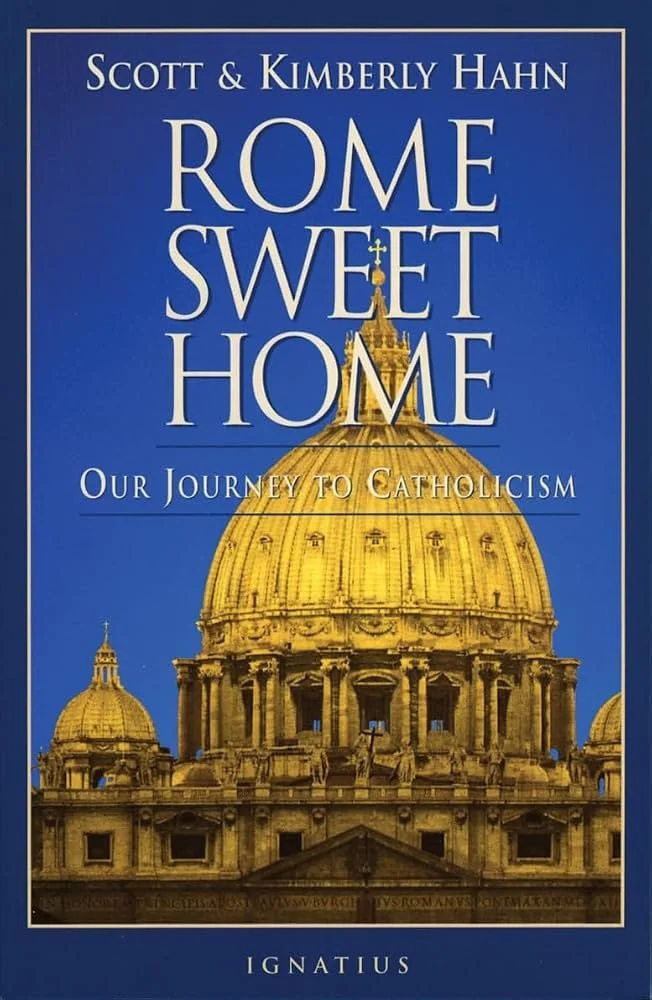
The debate between Roman Catholics and Protestants about the true nature of the church and the gospel has been going on for hundreds of years. Misrepresentations and unhelpful caricatures have been committed and promulgated on both sides of the debate. Where they are inaccurate, however, they should be called out. Such is the case with certain writings by the popular Roman Catholic theologian Scott Hahn. What makes Hahn particularly interesting is that he used to be a reformed Protestant. He was a Presbyterian theologian, pastor, and a devout student of the Reformers, especially Luther and Calvin. He then converted to Roman Catholicism and remains in the Roman Catholic Church. His writings appeal to people who are exploring their faith and might be considering Roman Catholicism.
One such writing is the book he wrote together with his wife Kimberly titled Rome Sweet Home: Our Journey to Catholicism (San Francisco: Ignatius Press, 1993). The title is clever and provides clear insight into the contents and purpose of the book. In the end, the Roman Catholic Church provided for the spiritual longings Scott and Kimberly always had and answered all the theological questions they wrestled with. Protestantism was a preparation for helping them find their true home in the Catholic Church. Where Protestants failed to answer questions, Roman Catholics always had a ready answer. In the end Rome became home. While the book is now a bit dated, it continues to appeal to readers who might also be considering Rome as home.
As a Protestant reading the Hahn’s story, I have major objections to ways in which they (but especially Scott) inaccurately portray Luther, Calvin, and the Protestant church. Some of what he writes is objectively wrong and should be called out for its inaccuracy.
Scott in particular writes often on covenant theology, which explains the relationship between God and man. Being Roman Catholic, Hahn’s understanding of covenant is interpreted primarily through sacramental lenses. The Church and its sacramental system provide the means by which God communicates his grace to man, and how man in turn relates to God through Christ (i.e. the Catholic Church). In providing the sacramental system that makes covenant relationship with God possible, the Church also provides a covenant family. Here is Scott in his own words: What I discovered was that the New Covenant established a new worldwide family in which Christ shared his own divine sonship, making us children of God (p. 30, Kindle Version).
Scott juxtaposes the New Covenant family of Roman Catholicism with the cold, contractual, legal language Luther and Calvin used to describe the exchange of our sins for Christ’s righteousness. In his words the New Covenant in Christ is much more than a simple contract or legal exchange, where he took our sin and gave us his righteousness, as Luther and Calvin explained it (p. 30). According to Hahn, Luther and Calvin explained this exchange exclusively in courtroom language (p. 30). Hahn then adds that thanks to his exposure to Roman Catholicism he was beginning to see that, far more than simply being a judge, God was our Father (p. 30).
According to Hahn, Luther and Calvin’s understanding of God is God the judge, but not God the Father. For Hahn the Roman Catholic Church corrects this problem. In the Church the believer has a new family, and this family has God as its Father.
The problem with this portrayal is that it is objectively false. Luther and Calvin did not, as Hahn claims, explain the exchange of our sins for Christ’s righteousness exclusively in terms of courtroom language. They did not see God as merely a judge, but in line with Scripture presented him also as a loving Father. Being a former student of Luther and Calvin, Hahn should know better.
Here is Calvin in his own words. Speaking of the great exchange of Christ’s righteousness for our sins, he writes: The whole may be thus summed up: Christ given to us by the kindness of God is apprehended and possessed by faith, by means of which we obtain in particular a twofold benefit; first, being reconciled by the righteousness of Christ, God becomes, instead of a judge, an indulgent Father (Institutes, 3.11.1.).
In his lectures on Galatians Luther makes a similar and convincing point in the following lengthy, but important, quote: In form this crying and sighing is that amid your trial you do not call God a tyrant, an angry judge, or a tormentor, but a Father—even though the sighing may be so faint that it can hardly be felt. By contrast the other crying is very great and is felt very strongly, when in genuine terror of conscience we call God wicked, cruel, an angry tyrant, and a judge. For then it seems that God has forsaken us and that He wants to banish us to hell. That is how the saints often complain in the psalms (Ps. 31:22, 12): “I am driven far from Thy sight”; “I have become like a broken vessel.” This is certainly not a sigh that says: “Father”; it is the roar of hatred for God that cries loudly: “Harsh judge, cruel tormentor!” Now it is time to turn your eyes away from the Law, from works, and from your own feelings and conscience, to lay hold of the Gospel, and to depend solely on the promise of God. Then there is emitted a little sigh, which silences and drowns out that violent roaring; and nothing remains in your heart but the sigh that says: “Abba! Father! However much the Law may accuse me, and sin and death may terrify me, nevertheless Thou, O God, dost promise grace, righteousness, and eternal life through Christ.” And so the promise produces the sigh that cries: “Father!” (Lectures on Galatians, commenting on Galatians 4:6 - LW vol. 26).
Clearly Hahn is wrong in stating that Luther and Calvin spoke of the great exchange in exclusively courtroom language. For them (and for all Protestants) God is both righteous judge and loving Father. One cannot be separated from the other. Hahn is wrong to caricature the Reformers and Protestantism in this way, ascribing to them aspects that are objectively false and therefore misinforming those who read his books. It is one thing for Scott and Kimberly to make their case for Roman Catholicism - and no one can blame them for doing so - but it is another to be inaccurate in describing Protestantism and the Reformers as they argue their case.
Evangelical readers of books like Rome Sweet Home who might be flirting with Rome need to remember that while being able to write in a way that appeals to evangelicals, Hahn remains (rightly so) thoroughly Roman Catholic in his theology. It is fine and helpful to read books like Rome Sweet Home, but it is the job of evangelicals to read with discernment and recognize its “Catholic-ness” and not be deceived by evangelical friendly words, wrongly assuming they mean the same thing. They do not.
Here is a helpful example in exercising this type of discernment. Writing on covenant, Hahn says: What I discovered was that the New Covenant established a new worldwide family in which Christ shared his own divine sonship, making us children of God. As a covenant act, being justified meant sharing in the grace of Christ as God’s sons and daughters; being sanctified meant sharing in the life and power of the Holy Spirit. In this light, God’s grace became something much more than divine favor; it was the actual gift of God’s life in divine sonship (p. 30, Kindle version).
This is a more complete citation of the first sentence cited above. Is this paragraph Roman Catholic, evangelical, or neutral in its theology? Most evangelicals would find nothing objectionable in it. Its theological framework, however, is decisively Roman Catholic and its implications are significant. Hahn’s phrase God’s grace became something much more than divine favor is perhaps the clearest indicator of this. During the Protestant Reformation the doctrine of grace was at the center of debate. The Reformers insisted that righteousness and justification, which are a gift of God’s grace, are alien to us and are only received through faith in Christ. Through faith in Christ his righteousness becomes ours, justifying us and giving us right standing before God. It provides a sure standing before God because it is in Christ. This justifying grace found in Christ alone, according to the Reformers, is God’s favor.
The Council of Trent (1545-1563) disagreed and pronounced anathemas against anyone who claimed: The grace, whereby we are justified, is only the favor of God (session 6, canon 11). Trent taught instead that this grace was inherent in us. Trent also condemned anyone who says we are justified by the sole imputation of the justice of Christ (session 6, canon 11).
With his words, then, Hahn is not at all evangelical in his theology but is simply affirming Trent. The theological consequences of this are significant. In affirming Trent, Hahn affirms that we have a measure of grace inherent to us, which means that our justification no longer rests in Christ’s accomplished work alone, but also in the measure of grace we have in us, which according to Rome’s own admission increases and/or decreases during the course of our life. Therefore, what Hahn describes as “much more”, is described by the Reformer’s as “much less.”
This helps us better understand what Hahn intends when he writes in the same paragraph: As a covenant act, being justified meant sharing in the grace of Christ as God’s sons and daughters. According to Roman Catholicism, and therefore according to Hahn, justification is a type of participation. It is participation in the sacramental economy through which measures of God’s grace are increased and justification is worked out. According to the Reformers, however, justification is forensic. It is an imputation of justification and a declaration of righteousness through faith alone in Christ alone. It is not a question of measures of grace that increase and decrease based on our participation in justification but is instead a total and assured victory over sin and its condemnation in Christ, and is therefore a forensic declaration of justification.
To undermine the Reformer’s emphasis on the forensic aspect of justification, Hahn frames it in legal terminology alone, wrongly suggesting that the Reformer’s stopped with the legal aspect of justification. But that is not at all the complete picture. Yes, justification is forensic and God is the judge who declares one righteous or unrighteous, but he is also a loving Father. As loving Father, he adopts his children and promises to love them and provide for their every need. In Christ God the Father provides peace and assurance. His children do not have to wonder about the security of their justification and salvation because in Christ the measure of his grace is made full, and that fulness is gifted to his children who trust in Christ for the forgiveness of their sins.
Hahn’s Roman Catholicism can provide no such assurance.
Reid Karr is the Associate Director of the Reformanda Initiative. Additionally, he is one of the elders of the evangelical church Breccia di Roma Prati in the neighborhood of Vatican City in Rome. He has also been employed by the International Mission Board of the Southern Baptist Convention since June of 2009. He is married to Steppie and together they have four children.