
Too Bad to be True?
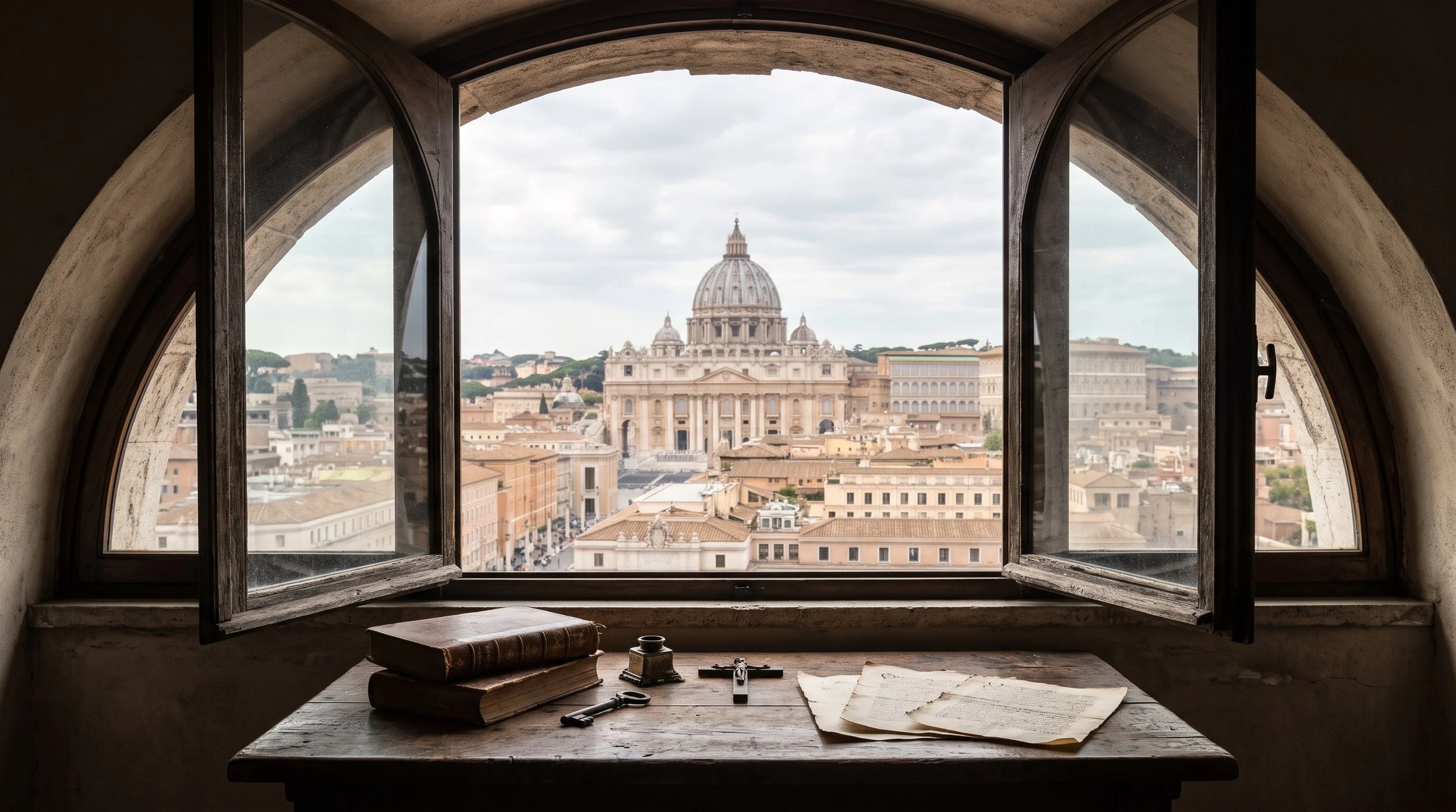
When is a church too bad to be true? Are the errors in the Roman Catholic Church (RCC) so bad that it can no longer be considered a true church? This simple question has serious implications:
· Historically: if Rome is a true church, were the Protestant Reformers schismatic (or is it just that she’s gotten better since the 16th century)?
· Theologically: Does Rome have the marks of a true church, if not how can she be called true?
· Pastorally: Should a true believer be encouraged to stay within the RCC or come out of her?
Modern Attempts at Retrieval of Assessments of Rome
Some evangelicals readily acknowledge that things are bad in the RCC but also argue that Rome should nonetheless be considered a true church. This approach is often defended with an appeal to church history: “we are only doing what the Reformers did!” However, this appears to be a selective reading of Protestant polemics in the 16th and 17th centuries because the consensus among Reformed theologians was that the RCC should be denied the adjective “true.”[1]
Theological retrieval has always been a part of the Protestant project. Classical Reformed thought provides “numerous examples of thoughtful appropriation of the catholic tradition.”[2] As our Reformed forefathers retrieved ancient and medieval theology, they claimed their communities were legitimate expressions of the one, holy, catholic and apostolic church, whereas Rome was not. Their claim of catholicity cannot be separated from their critique of Rome.
Theological retrieval can be perilous, as Gavin Ortlund reminds us in his Theological Retrieval for Evangelicals: “…we must be wary of the danger of distortion, in which we move too quickly to the present issue without sufficiently ‘doing our homework,’ such that the historical resource being retrieved is somewhat caricatured or misconstrued.”[3] Ortlund is right and he usually steers clear of this peril in his What it Means to Be Protestant. However, there are times I fear he hasn’t followed his advice as carefully as he should have—and he’s not alone.
Perilous Retrieval of Assessments of Rome
Ortlund, along with Chris Castaldo and Matthew Barrett, all invoke section 2 of book 4 of Calvin’s Institutes in similar contexts. One of the key sections is this bit from 4.2.12:
When we categorically deny to the papists the title of the church, we do not for this reason impugn the existence of churches among them. Rather, we are only contending about the true and lawful constitution of the church (trans. McNeil and Battles)
Ortlund specifically invokes the above section and then notes: “[Calvin] compared these true churches to a scattered remnant, and the general status of the Church of Rome to a half-demolished building. These statements are representative of the general perspective of the magisterial Reformers—the Church of Rome had fallen into gross sin and error, but she was still a church.”[4] In using the phrase “these true churches”, it appears that Ortlund makes Calvin say more than he actually did.
Castaldo’s article, “Is Rome a True Church?” raises similar concerns. The article beings with a personal anecdote of a specific experience with his Roman catholic family before presenting what he considers to be a via media:
A serious application of truth and grace would have us recognize it as belonging to Christendom, and, inasmuch as it elucidates the orthodox core, see it as a true church, but one with major problems that often distort the gospel.[5]
Castaldo sees his position as “the general position of Protestants from the earliest days.”[6] While the call to careful interaction with RC friends and family is exemplary, he too goes beyond Calvin, calling Rome a true church because she has an underlying orthodox core (which presumably is intact and unpolluted).
In his Reformation as Renewal, Barret quotes Calvin from another section: "‘Christ lies hidden, half buried, the gospel overthrown, piety scattered, the worship of God nearly wiped out’” (Institutes 4.2.1) and then observes, “‘Nearly’ wiped out—that qualifier keeps Calvin from rejecting these churches as true churches altogether.”[7] For Barrett, Calvin considers Rome to be a true church because she has a diamond buried in the rubble. For some reason he seizes on the phrase, “nearly wiped out” and not “the gospel overthrown.”
Rereading Calvin
Let’s take another look at the same section from Calvin we cited above (4.2.12), but this time from the Beveridge translation.
Therefore, while we are unwilling simply (non sempliciter) to concede the name of Church to the Papists, we do not deny that there are churches among them. The question we raise only relates to the true and legitimate constitution of the Church.
The contrast is not—the way translation used by Ortland, Castaldo and Barrett implies— between the church or simply churches. Calvin cannot simply or properly concede the title of “church” to RCC. The existence of churches can only be acknowledged with qualification (secundum quid in Scholastic language). Chapter 1 of Book 4 describes the marks of the true church. Chapter 2 (the source of our citation) makes plain that Rome does not have the marks of the true church. For Clavin, it is only the pure preaching of the Word “that can give the true meaning of the church” (4.2.4). Rome’s congregations cannot be true churches as there is a sense in which they are not churches at all because of their ungodly doctrine (4.2.10). Roman churches are not utterly dead (they still exist as churches and can be described as such) because there are vestiges of the marks of the church which remain (4.2.11). However, these traces of the church are not sufficient to render them true.
Why do some theologians seem to misread Calvin whereas others read to condemn Rome as a false church?[8] In general, their reading could be guided by a precommitment to the “bad but true” position. Specifically, we can make three observations about the use of sources like Calvin to defend the “bad but true” thesis.
First, it seems that the position is employed to promote a winsome posture in interactions with Rome and as a reaction to overly inflammatory apologetics. I’m all for an irenic approach but surely irenicism is compatible with consistent clarity. Let’s not forget that John Calvin would be labeled “anti-Catholic” by modern standards.[9] It is reasonable to appropriate only a part of Calvin’s teaching on Rome, but we should tell our readers we are doing so and avoid putting words in his mouth.
Second, there seems to be somewhat of clunky application of protestant claims of catholicity. The protestants conception of catholicity is defined doctrinally rather than institutionally. Therefore, since the RCC was rejected on doctrinal lines to call her a true church is inconsistent with and even inimical to the catholicity of Protestantism.
Third, it seems the “bad but true” approach assumes that additions have somehow had no impact on a pristine doctrinal core. There is compartmentalization so that the poison is present but doesn’t pollute the clean water. If we could only remove the rubble, we could clearly see the diamond. I’m all for acknowledging commonalities and the significance of our shard historical heritage, but we need to be mindful of the inevitable interconnectedness of theology. Doctrinal commitments are not an indestructible jewel that remain unaffected no matter how much or how long they are enveloped in error. Doctrinal commitments are more like living organisms: there is a spectrum of robustness—or health. There is a reason the scriptures speak of doctrine that is sound or in good health (1 Tim. 1:10; Titus 1:9, 2:1)! Buried under error they become unhealthy, decay and decompose. Vestiges remain but the alterations are necessarily fundamental.
Is the Roman Catholic Church too bad to be true? Simply and sadly, “yes.” Even “the purest churches under heaven are subject to mixture and error” (2LBCF, 26.3), but a church’s error can become so bad that it is no longer a true church. There is a remnant of true believers within Rome, along with a mixed residue of some orthodox elements, but Rome is a false church.
[1] To call the RCC impure and corrupt but true was the minority position. See Petrus van Mastricht, Theoretical-Practical Theology, 1.7.1.XXV, pg. 341.
[2] Allen and Swain, Reformed Catholicity, 13.
[3] Theological Retrieval for Evangelicals
[4] Ortlund, What it Means to Be Protestant, 15-16.
[5] Chris Castaldo, Is Rome a True Church, Part 1: https://www.newcovenantnaperville.org/is-rome-a-true-church-part-1. These articles originally appeared as one article on: https://mereorthodoxy.com/is-rome-a-true-church?hss_channel=fbp-42613442334
[6] Ibid.
[7] Ibid., 879, n. 4.
[8] Sinclair Ferguson, John Calvin on the True Church. https://www.reformation21.org/blogs/john-calvin-on-the-true-church.php
[9] Todd Billings, “The Catholic Calivin,” Pro Ecclesia 20.2 (2011), 120: “Clearly there is a sense in which Calvin was deeply and passionately anti-Roman Catholic.”

Matthew Johnston is pastor of the Lux Evangelica church in Genoa and director of the Verbum Evangelical Theological Institute. He has lived in Italy since 2013 and previously served as an associate pastor in Florida. He studied at The Expositors Seminary (MDiv, 2011) and the University of Glasgow (MTh, 2023), where he researched Christology in the thought of Robert Bellarmine and Francis Turretin. He is completing a doctorate in historical theology at ETF Leuven.